4 KiB
Zigbee firmware sample
This sample is adapted from the zigbee_template from the nRF Connect SDK. It's a basic experimental/educational/exploratory firmware sample for b-parasite.
Clusters
These clusters are defined in the sample:
| Cluster ID | Name |
|---|---|
| 0x0001 | Power Configuration |
| 0x0400 | Illuminance Measurement |
| 0x0402 | Temperature Measurement |
| 0x0405 | Relative Humidity Measurement |
| 0x0408 | Soil Moisture Measurement |
Pairing Mode
The sample will first boot and start looking for a Zigbee coordinator - in pairing mode. The onboard LED will be flashing once a second while in this mode. Once a suitable network is found, the LED will briefly flash 3 times and remain off.
Factory Reset
A factory reset will make b-parasite forget its network pairing information and switch to pairing mode. There are two (mutually exclusive) methods to perform a factory reset, controlled by the CONFIG_PRST_ZB_FACTORY_RESET_METHOD config flag.
Factory Reset Method 1 (default) - Double reset
Resetting b-parasite twice in the timestamp of 5 seconds will perform a factory reset. With this method, both shorting the RST pin to ground and removing-inserting the battery counts as a reset.
For better results, wait > 1 and < 5 seconds second between the resets. The LED will flash a total of 8 times to indicate it worked.
Factory Reset Method 2 - Reset Pin
In this method, there's a distinction between two reset modes.
Power up mode
The device enters this mode when it is powered. For example, swapping an old battery or connecting to eternal power. This is the "usual" reset mode, and joined networks will be remembered.
Reset pin mode
If the device's RESET pin is briefly grounded, the device will effectively be factory reset. The device will leave its previous network and start looking for a new one.
While it works, this method can be finicky - an accidental pin reset will perform an unwanted factory reset.
Configs
Available options in Kconfig. Notable options:
CONFIG_PRST_ZB_SLEEP_DURATION_SEC: amount of time (in seconds) the device sleeps between reading all sensors and updating its clustersCONFIG_PRST_ZB_PARENT_POLL_INTERVAL_SEC: amount of time (in seconds) the device waits between polling its parent for data
Over the air (OTA) updates
The firmware is prepared for accepting over the air updates. You need to set the toggle CONFIG_ZIGBEE_OTA in the prj.conf to y to compile OTA functionality in the firmware.
Once the toggle is set, during compilation there will be a *.zigbee file generated as well, which is the firmware update file. This needs to be provided to your zigbee coordinator, so that it can be discovered by your deployed and paired parasites. The version CONFIG_MCUBOOT_IMGTOOL_SIGN_VERSION needs to be increased to allow the device to recognize the firmware file as an actual update.
Some helpful information on how to provide an firmware update via Home Assistant and ZHA integration can be found in the Home Assistant forums.
Home Assistant Integration
This firmware sample has only been tested with Home Assistant, using one of the following integrations.
Zigbee Home Automation (ZHA)
With the ZHA Home Assistant integration, b-parasite should work out of the box.
Zigbee2MQTT & Home Assistant
With Zigbee2MQTT, a custom converter is required. The b-parasite.js file contains such a converter. See Support new devices for instructions.
Battery Life
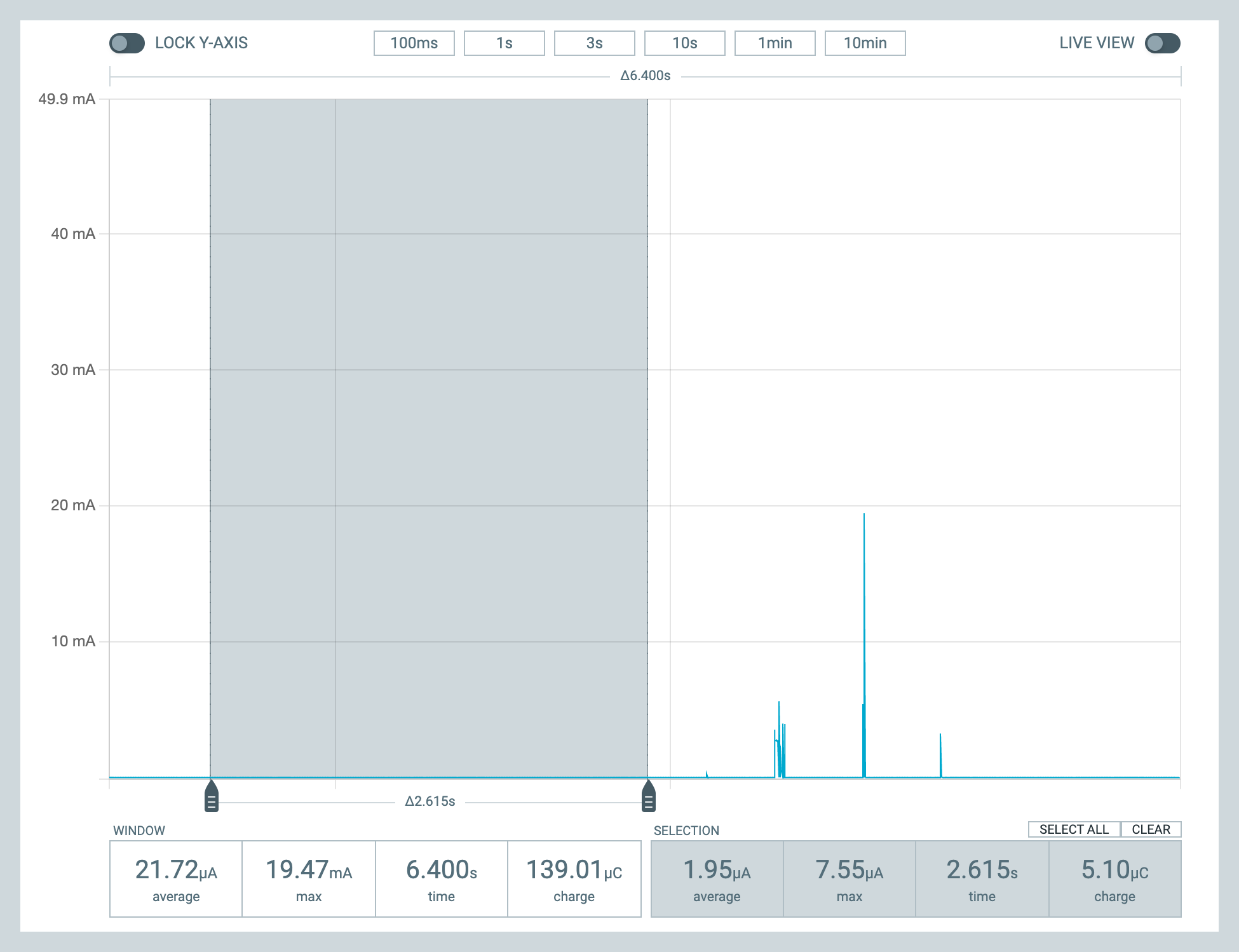
While sleeping, the device consumes around 2 uA:
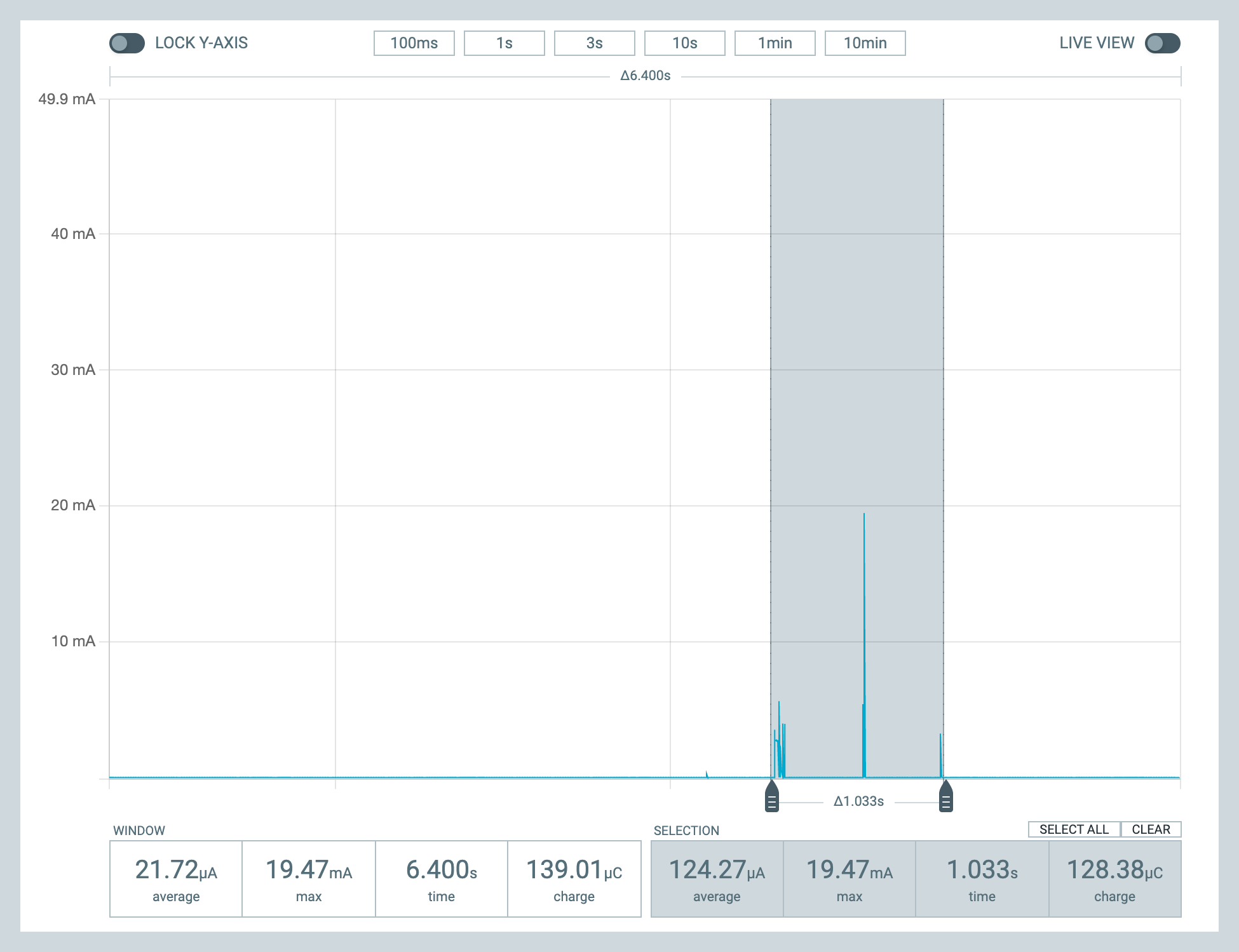
 In the active cycle, it averages around 125 uA for 1 second: